What Actually Decides Where a Fence Line Goes on a Cape Property
Before a single post goes in the ground, the property itself decides the fence line, not the first guess on paper.
September 17, 2026 · 4 min read
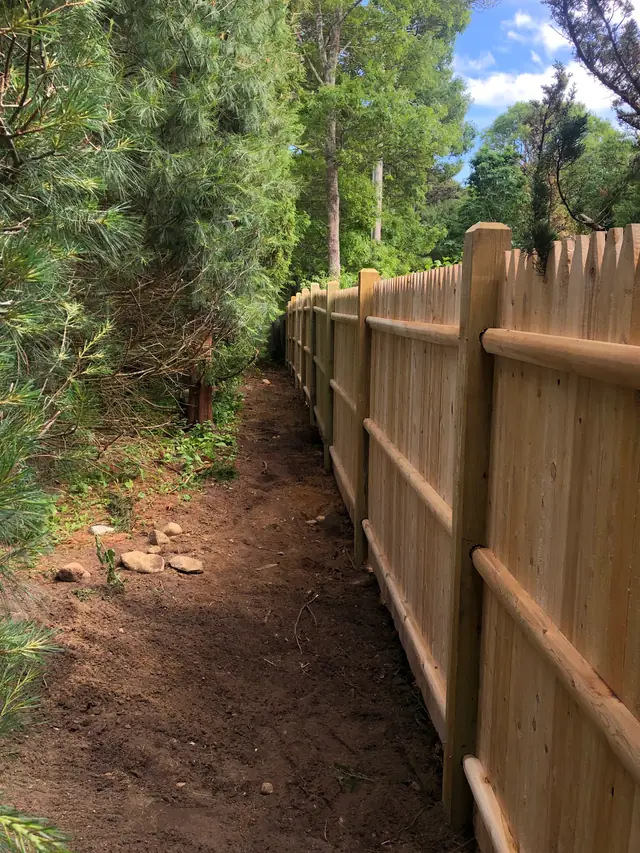
On a lot in North Eastham or anywhere else on Cape Cod, the fence line on paper and the fence line that actually gets built are not always the same thing. A property survey tells you where the boundary sits. It does not tell you where a post can actually stand, and that gap is exactly what gets worked out on the walk with the estimator, before anything is priced or scheduled.
Sandy soil and a soft base
Most of Cape Cod sits on glacial outwash, sand and gravel laid down thousands of years ago, and it behaves differently under a post than the clay or loam soil found further inland. A hole that looks solid the day it is dug can settle or shift after a wet winter if the footing was not set with that soil in mind. Landmark Fence has been setting posts in this exact ground since 1967, long before the current business was established in 1992, and that stretch of time is mostly a record of learning which parts of a Cape lot hold a post well and which parts need a different approach before the first hole goes in.
Sand also drains fast, which is good for keeping water off a footing but means a post can work loose over a few seasons if it was set shallow to begin with. None of this is guesswork on a first job. It is the reason an experienced crew checks the ground before committing to a depth, rather than digging every hole to the same number and hoping the soil cooperates.
Slope, ledge, and trees change the plan
A flat, cleared yard is the easy case, and plenty of Cape properties are not that. A gentle slope changes how a fence line steps down a yard without leaving gaps underneath it. Exposed ledge, which shows up often enough on the Outer Cape to be worth planning for, can turn a straight run into one with a jog around the rock instead of through it. Mature pitch pine and scrub oak, the trees that give this part of the Cape its look, have root systems a post hole has to work around instead of through. None of this is a problem for the job. It is just information that only shows up once someone actually walks the ground.
A line drawn on a survey does not show any of it. A line walked in person does, and that is the difference between a fence that goes in clean the first time and one that needs a mid-job adjustment because a root or a slab of ledge turned up where a post was supposed to go.
Why the walk still comes before the plan
This is why the process starts with a visit to the property rather than a fence style picked off a page. Whether the job is a residential privacy fence, a pool or dog enclosure, or a commercial run for a school or an industrial site, the walk covers where the ground is soft, where it is not, where a gate needs to swing, and where a neighbor's existing fence or a shared driveway changes the layout. Discuss the requirements with the crew directly, and the walk turns into a plan built for the actual lot rather than a generic one.
One thing the walk will not settle, and should not try to, is anything to do with pool barrier requirements, setback distances from a property line, or height limits in a given town. Those rules genuinely vary from one Cape Cod town to the next, and the right answer is always to check with the local building department, or ask directly, rather than assume a rule read somewhere else applies to a specific address.
Residential and commercial ground work the same way
The same groundwork applies whether the property is a house on a quiet North Eastham street or a commercial site like a school, a tennis court, or an industrial lot. Commercial estimates are free regardless of the size of the job, and the walk that decides a home fence line is the same kind of walk that decides a guard rail run or a playground enclosure. The ground does not know the difference between residential and commercial. It only knows sand, slope, ledge, and roots, and all four get accounted for before a quote is written.
Residential jobs tend to bring their own version of the same questions: where the privacy fence needs to start and stop, how close it can sit to a pool or a shower enclosure, and whether a vinyl pergola or a run of custom wood fits the space better than a straight fence line would. Commercial jobs bring theirs: how a fence around a school or a playground has to survive a full year of public use, or how a guard rail sits relative to the grade of a parking lot. In both cases, the walk is what turns those questions into an actual plan instead of a guess.
If a fence is being planned anywhere within 30 miles of North Eastham, the fastest way to get an accurate answer is still the oldest one: call 508-255-1710, ask for Todd, and get a walk scheduled. Calls are returned the same day, and the property tells the rest of the story once someone is standing on it. The full range of what gets built once the line is set is on the residential fencing and commercial fencing pages, and the details can go straight through on the contact page as well.
Landmark Fence, 508-255-1710
Call 508-255-1710More articles
Choosing a Fence Material When the Salt Air Gets a Vote
The right fence material on Cape Cod depends on exposure as much as it depends on looks.
Renting Temporary Fence for a Build
A construction site needs a fence line for as long as the work takes, not a day longer.